Fundamental Waveform Parameters
Understanding period, frequency, amplitude, and phase in audio signals.
Fundamental Waveform Parameters
Any sound signal, no matter how complex, can be described using a small set of fundamental parameters. In this section, we introduce period, frequency, amplitude, and phase, which together define the behavior of a waveform in the time domain. These concepts form the basis for later transformations and features used in audio deep learning.
Period and Frequency
The period of a waveform is the time it takes to complete one full cycle. If a waveform repeats itself every seconds, then is its period. Period captures repetition in the time domain.
Frequency describes the same phenomenon from a different perspective. It measures how many cycles occur in one second and is expressed in Hertz (Hz). Period and frequency are inversely related:
A shorter period corresponds to a higher frequency, and a longer period corresponds to a lower frequency. Perceptually, frequency is strongly associated with pitch. High frequency signals are perceived as high pitched sounds, while low frequency signals are perceived as low pitched sounds.
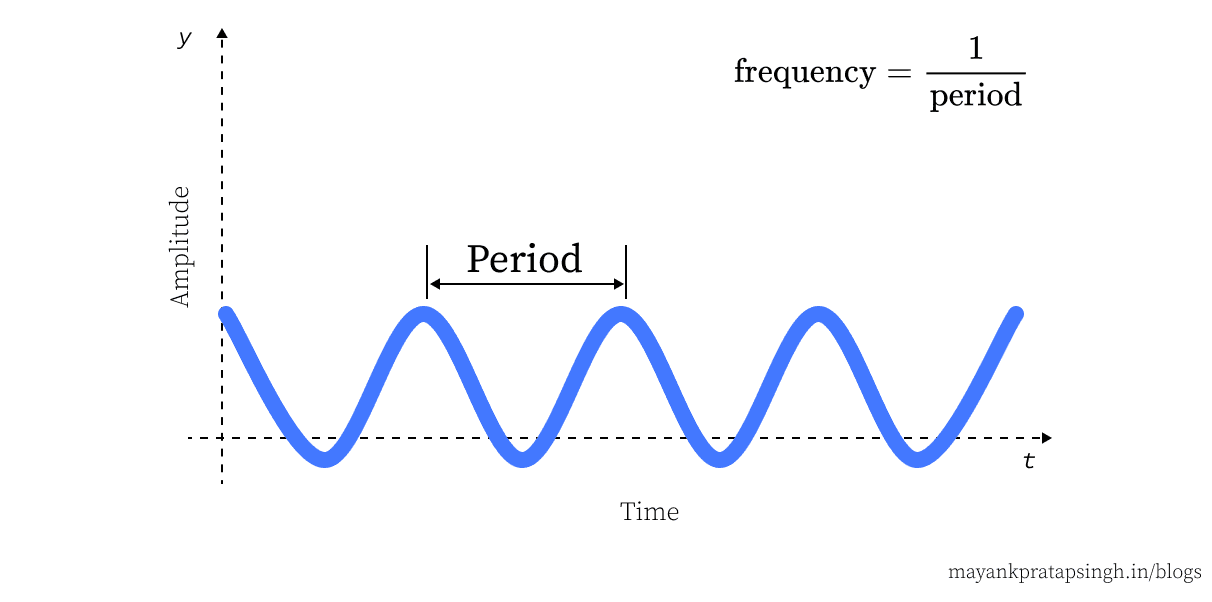 Figure 1.10: Relationship between period and frequency in a periodic waveform. Frequency is defined as the inverse of the period.
Humans typically hear frequencies in the range of approximately 20 Hz to 20 kHz. Frequencies below this range are referred to as infrasound, while frequencies above are ultrasound.
Amplitude
Amplitude measures the magnitude of a waveform’s oscillation relative to its reference level. In physical terms, amplitude corresponds to the strength of pressure variation in the air. In digital audio, it represents the signal’s instantaneous magnitude.
Amplitude is closely related to loudness, although perceived loudness also depends on frequency content and human auditory perception. Larger amplitudes indicate more energetic signals and are generally perceived as louder sounds.
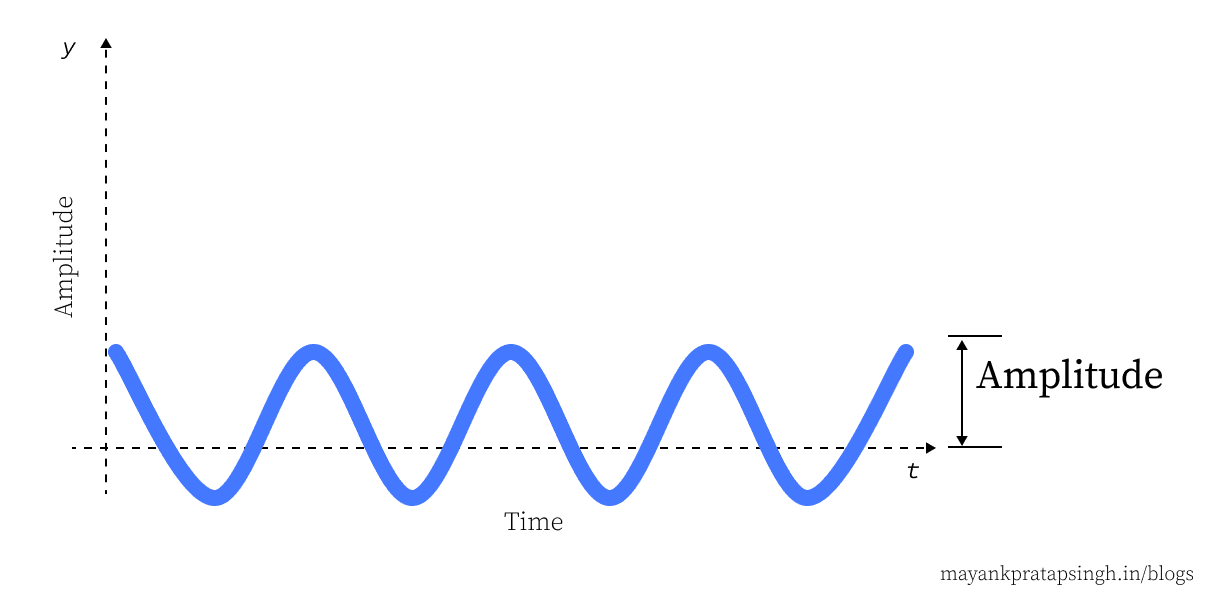 Figure 1.11: Illustration of waveform amplitude, showing the vertical distance between the signal peak and the reference level.
In machine learning pipelines, amplitude scaling affects numerical stability and model behavior, which is why normalization is a common preprocessing step.
Phase
Phase describes the position of a waveform within its cycle relative to a reference point in time. Two signals can have the same frequency and amplitude but differ in phase, meaning their peaks and troughs occur at different times.
Phase becomes especially important when multiple waveforms interact. Depending on their relative phase, signals can reinforce each other or partially cancel out. This phenomenon plays a role in interference, spatial audio, and multichannel signal processing.
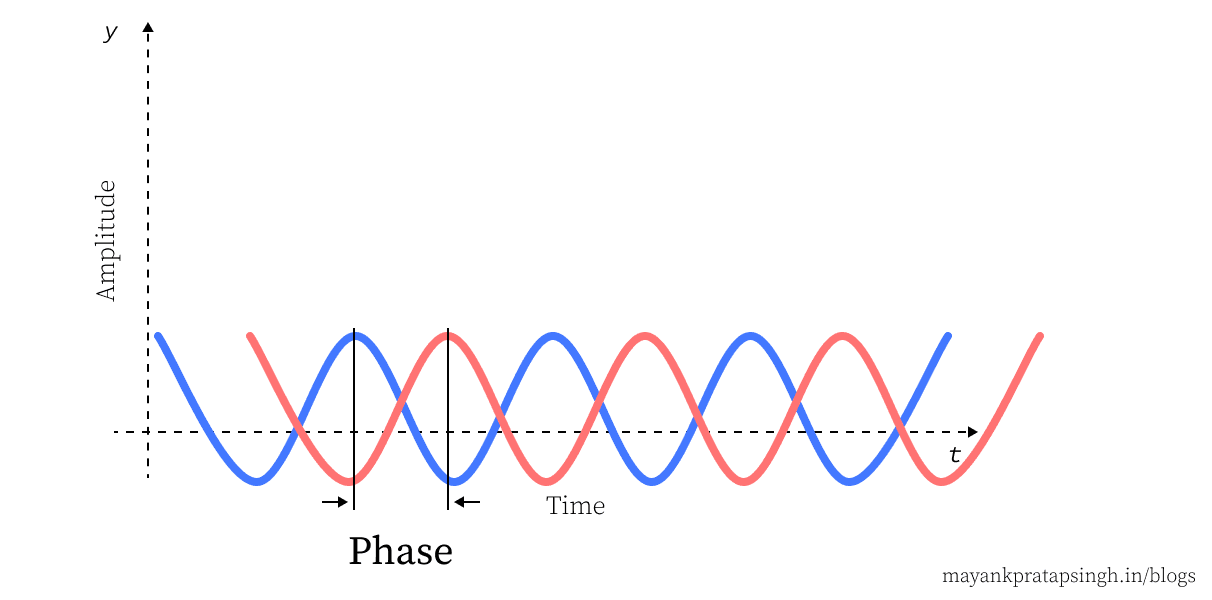 Figure 1.12: Two waveforms with identical frequency and amplitude but different phase offsets.
While phase is often discarded in magnitude based representations such as spectrograms, it remains critical for waveform reconstruction and high fidelity audio synthesis.
Interactive Waveform Visualizer
At the end of this section, an interactive waveform visualizer allows you to manipulate amplitude, frequency, and phase in real time.
Use the amplitude slider to observe how signal strength changes. Adjust frequency to see how cycle density increases or decreases. Modify phase to shift the waveform along the time axis without altering its shape. Experimenting with these controls helps solidify intuition about how abstract parameters map to concrete signal behavior.
This visual and interactive understanding will be essential when these same parameters reappear implicitly in spectral representations and neural audio models.
Newsletter
Stay in the loop
Get notified when new chapters drop. No spam, unsubscribe anytime.