Sound as a Physical Signal
Understanding sound as a mechanical wave and its properties.
Visualizing air molecule compression and rarefaction.
Sound as a Physical Signal
Sound originates from vibrating objects. When an object vibrates, it induces oscillatory motion in the surrounding air molecules. These molecules collide with neighboring molecules, creating localized fluctuations in air pressure. As this process repeats, pressure variations propagate through space, transferring energy from the source to a receiver such as the human ear or a microphone.
This propagation mechanism defines sound as a mechanical wave. Mechanical waves require a physical medium in order to travel. In everyday conditions, this medium is air. Unlike electromagnetic waves, sound cannot propagate in a vacuum. The wave itself does not transport matter across space. Instead, individual air molecules oscillate around their equilibrium positions while the disturbance moves forward.
In the interactive visualizer shown at the beginning of this section, each red particle represents an air molecule. By adjusting the amplitude and frequency controls, you can observe how stronger vibrations increase pressure variation, while higher frequencies lead to more rapid oscillations. Tweak these parameters to directly connect physical motion with the abstract waveform representation discussed next.
Waveforms as Audio Representations
A waveform is a time-domain representation of sound. It plots instantaneous pressure deviation around a reference level, typically normalized around zero, as a function of time. Despite its apparent simplicity, a waveform encodes rich information about intensity, timing, and structure.
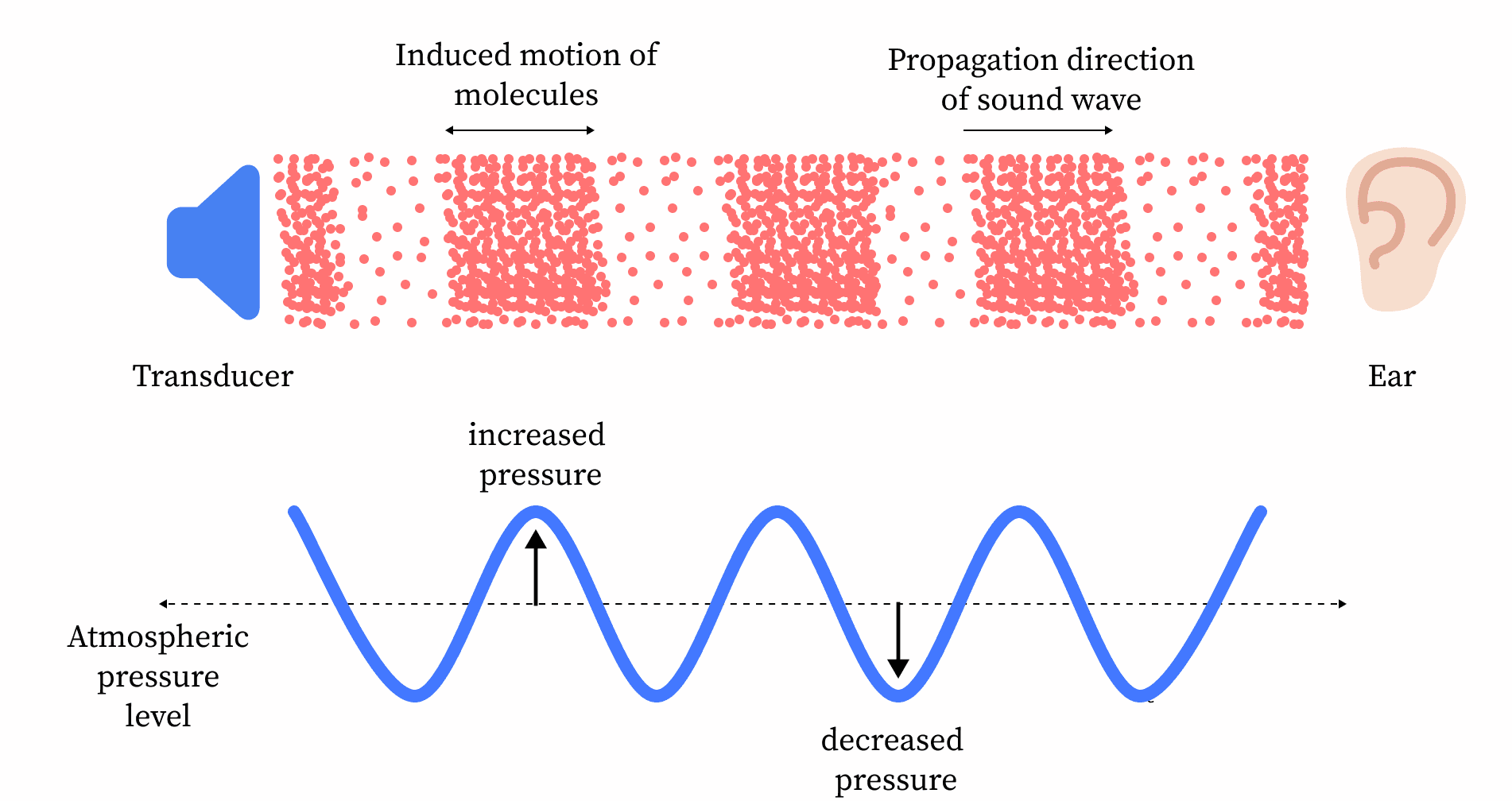 Figure 1.6: Relationship between molecular motion, pressure variation, and the waveform abstraction.
From a waveform, we can infer temporal cues such as note onsets, durations, silence, and dynamic changes. However, frequency content is not explicitly visible, especially for complex signals like speech or music. This limitation motivates later transformations that reveal frequency structure while preserving temporal information.
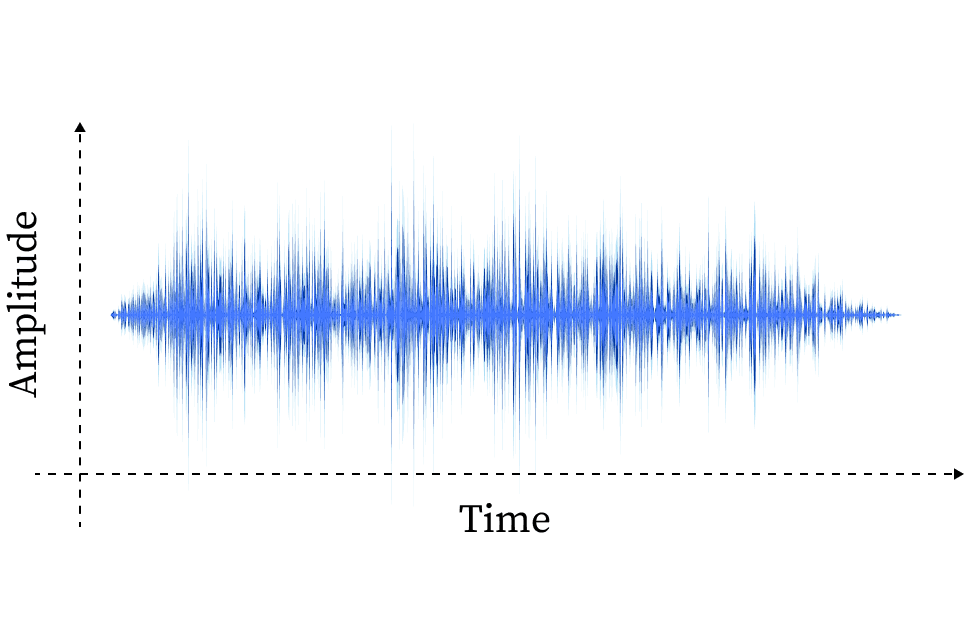 Figure 1.7: An example waveform of a real audio signal plotted over time.
Throughout this blog, the waveform will serve as the foundational representation from which more expressive audio features are derived. Returning to the visualizer and experimenting with different parameter settings will help build intuition for how simple oscillations combine to form complex audio signals used in deep learning systems.
Newsletter
Stay in the loop
Get notified when new chapters drop. No spam, unsubscribe anytime.