Phase in Audio Signals
Building an intuitive understanding of phase, interference, and its importance in machine learning.
Phase is one of the most misunderstood concepts in audio and signal processing. Unlike frequency or amplitude, phase is not directly perceived as loudness or pitch. However, it strongly influences how signals combine, align, and interfere.
For machine learning systems that process audio, phase affects feature extraction, data consistency, and model stability.
This chapter builds an intuitive and practical understanding of phase, starting from a single waveform and extending to interference, recording environments, and interactive visualization tools.
The Wave Cycle and Phase
Sound is a time-varying pressure signal. When visualized, it appears as a repeating waveform. Each repetition is called a cycle. Phase describes the position of the waveform within its current cycle at a specific moment in time.
A complete cycle is measured from 0 degrees to 360 degrees.
Figure 5.1 illustrates a sinusoidal waveform over time and highlights one full cycle.
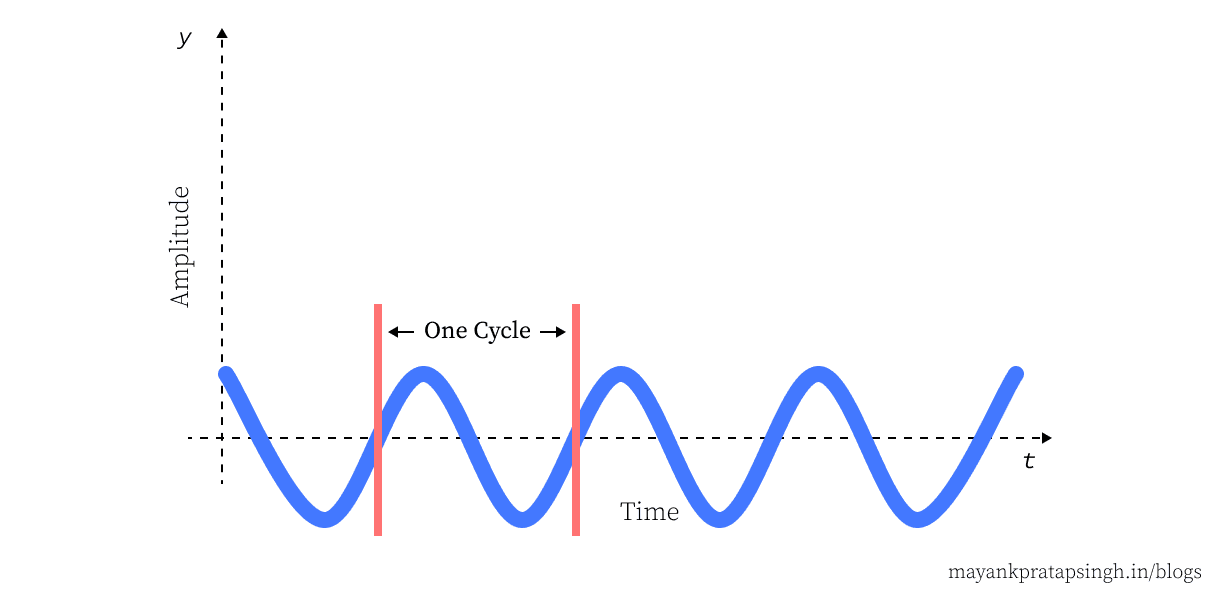 Figure 5.1: One complete waveform cycle measured over time.
Key reference points within a cycle are shown in Figure 5.2.
- 0°: The waveform begins its cycle.
- 90°: The waveform reaches maximum positive amplitude.
- 180°: The waveform crosses the neutral axis.
- 270°: The waveform reaches maximum negative amplitude.
- 360°: The cycle completes and repeats.
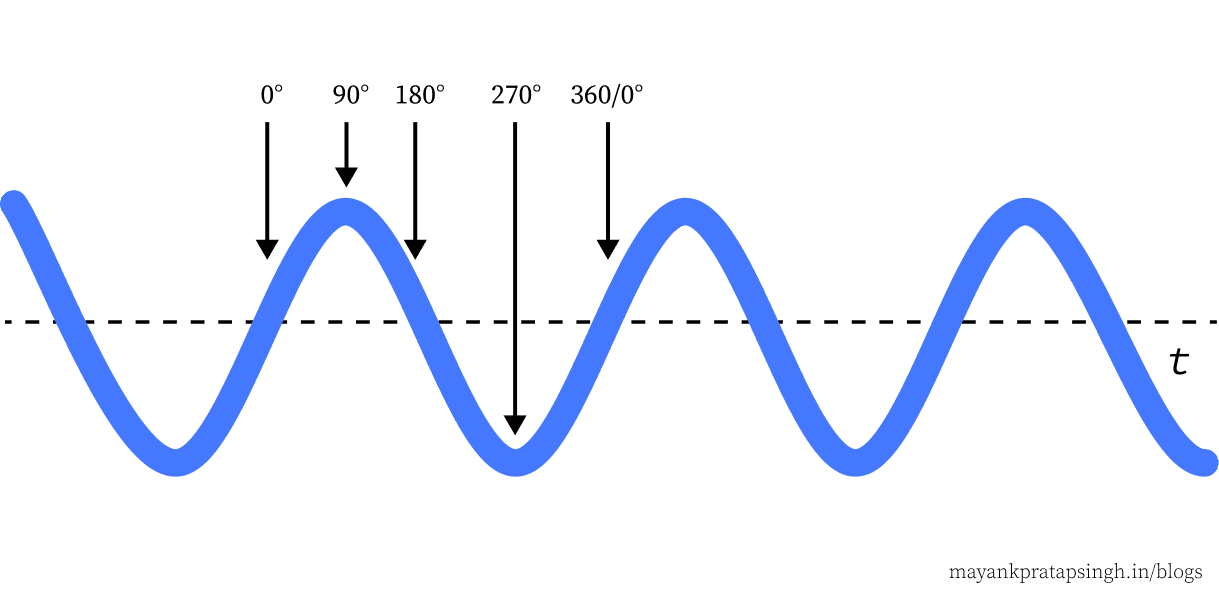 Figure 5.2: Phase angles within a single waveform cycle.
Phase as Relative Position
Phase only has meaning when compared to another signal. A single waveform by itself has no "absolute" phase. Phase is always measured relative to a reference signal.
Figure 5.3 shows two sine waves with the same frequency but different starting positions. The horizontal displacement between them represents a phase difference.
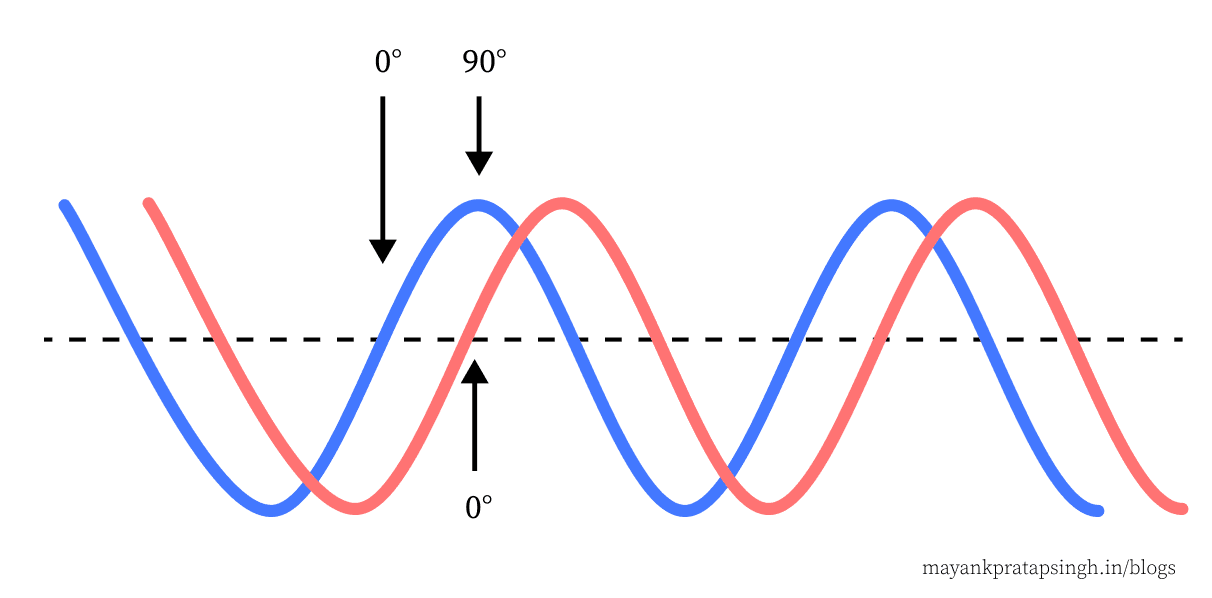 Figure 5.3: Two waveforms with identical frequency and different phase offsets.
If two signals are perfectly aligned, they are said to be in phase. If one signal is shifted by half a cycle relative to the other, they are out of phase.
This idea of relative alignment is critical in audio pipelines where multiple signals are combined, such as multi-microphone recordings or stereo channels.
Phase Interference
When two or more waveforms overlap in time, their amplitudes combine. This interaction is called interference. The result depends entirely on their phase relationship.
Figure 5.4 summarizes three common interference cases.
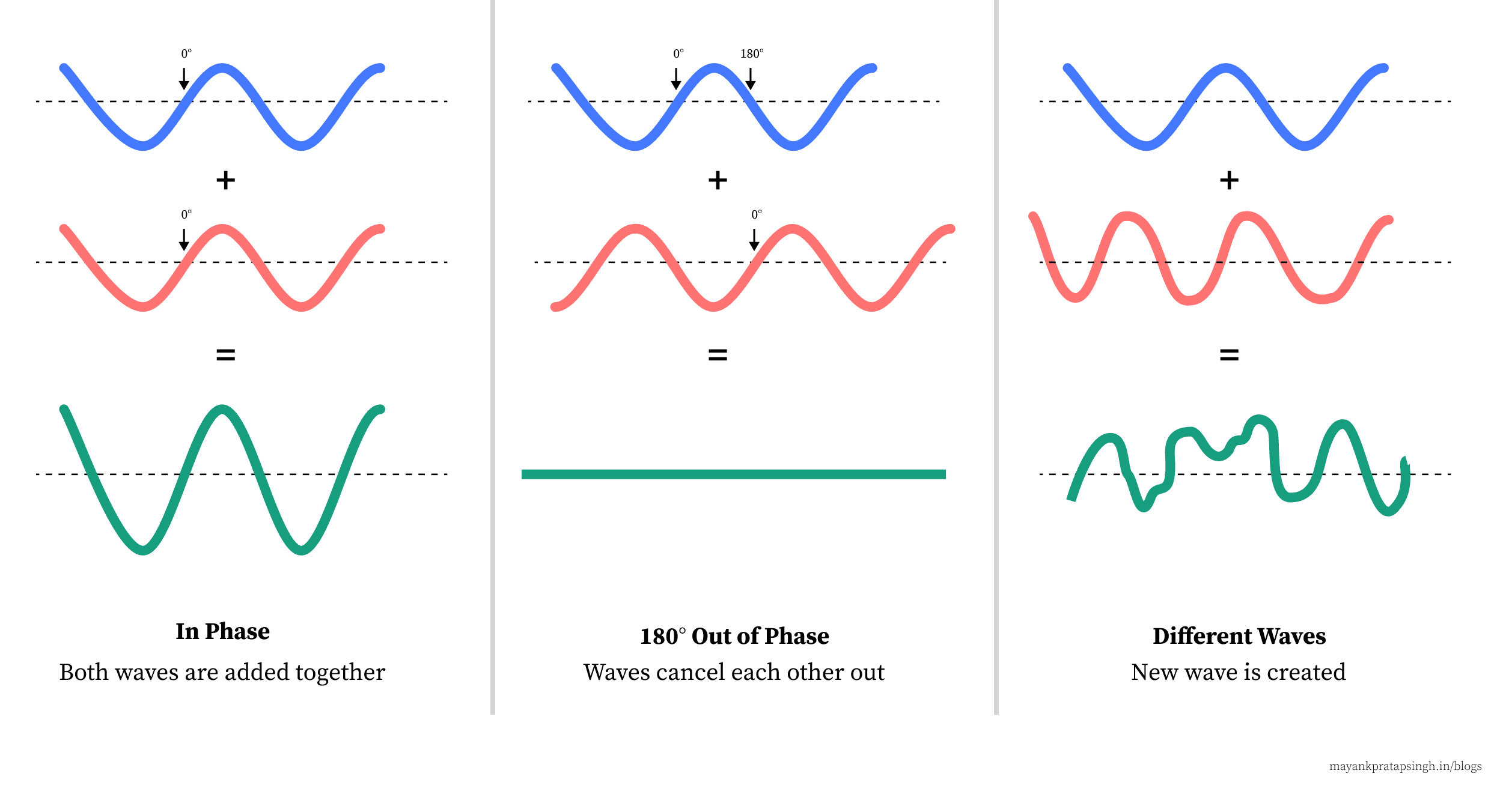 Figure 5.4: Constructive interference, destructive interference, and mixed interference.
Constructive Interference
When waves are in phase, their peaks and troughs align. The resulting waveform has higher amplitude. Energy increases without changing frequency.
Destructive Interference
When waves are 180 degrees out of phase, peaks align with troughs. The signals cancel each other, producing silence or severe attenuation.
Partial or Mixed Interference
When phase differences fall between these extremes, some frequencies reinforce while others cancel. This produces irregular patterns often perceived as coloration or hollowness.
In machine learning terms, interference alters the statistical properties of the signal. This directly impacts learned representations, especially in spectral features.Phase Shift and Signal Delay
A phase shift occurs when two signals have the same frequency but different arrival times. This is equivalent to delaying one signal relative to the other.
Delay, distance, and phase are mathematically linked. A small physical distance difference between microphones translates into a time delay, which becomes a phase offset at a given frequency.
- Low frequencies tolerate larger delays before cancellation occurs.
- High frequencies are much more sensitive.
This is why phase issues often appear first in higher frequency bands. For audio datasets, inconsistent phase relationships introduce variance that models must learn around rather than learn from.
Phase in Recording Environments
Phase interactions naturally occur in real spaces.
Direct sound from a source combines with reflected sound from walls, floors, and ceilings. These reflections are delayed versions of the original signal. When reflections recombine with the direct signal, constructive and destructive interference patterns emerge. In enclosed spaces, this leads to standing waves and frequency-dependent amplification or cancellation.
Microphone placement strongly influences phase behavior. Two microphones capturing the same source from different distances will record phase-shifted versions of the signal. If those channels are later summed, cancellation can occur.
In data collection for machine learning, uncontrolled phase effects introduce nonstationary artifacts that reduce generalization.Why Phase Matters in Machine Learning
Many audio models rely on magnitude-based features such as spectrograms or mel-frequency representations. While these often discard explicit phase information, phase still influences the signal before feature extraction.
Phase affects waveform alignment, transient structure, and interference patterns. These, in turn, shape the magnitude spectrum the model sees.
In tasks such as speech enhancement, source separation, and spatial audio, phase becomes explicitly important. Modern models increasingly learn phase-aware representations or operate directly in the time domain. Ignoring phase entirely is often acceptable for classification tasks but becomes limiting for generative or reconstruction tasks.
Learning Phase with a Visualizer Tool
To build intuition, explore the interactive phase visualization below. This tool allows direct manipulation of phase and frequency while observing the resulting waveform.
Phase Interference
Select a template to visualize interaction.
Figure 5.5: Interactive phase interference visualizer.
How to use this tool:
- Start with two identical sine waves: Set phase difference to 0 degrees and observe amplitude doubling.
- Explore Cancellation: Increase phase toward 180 degrees and observe gradual cancellation.
- Vary Phase: Lock frequencies and vary phase continuously.
- Frequency Sensitivity: Change frequency while keeping phase fixed to observe sensitivity.
This hands-on exploration helps bridge the gap between mathematical definitions and real signal behavior. Understanding phase visually makes it easier to reason about data artifacts, preprocessing choices, and model failures.
Newsletter
Stay in the loop
Get notified when new chapters drop. No spam, unsubscribe anytime.